Java4Shell: What the Critical Java Flaw Means for Banks and Your Security Strategy
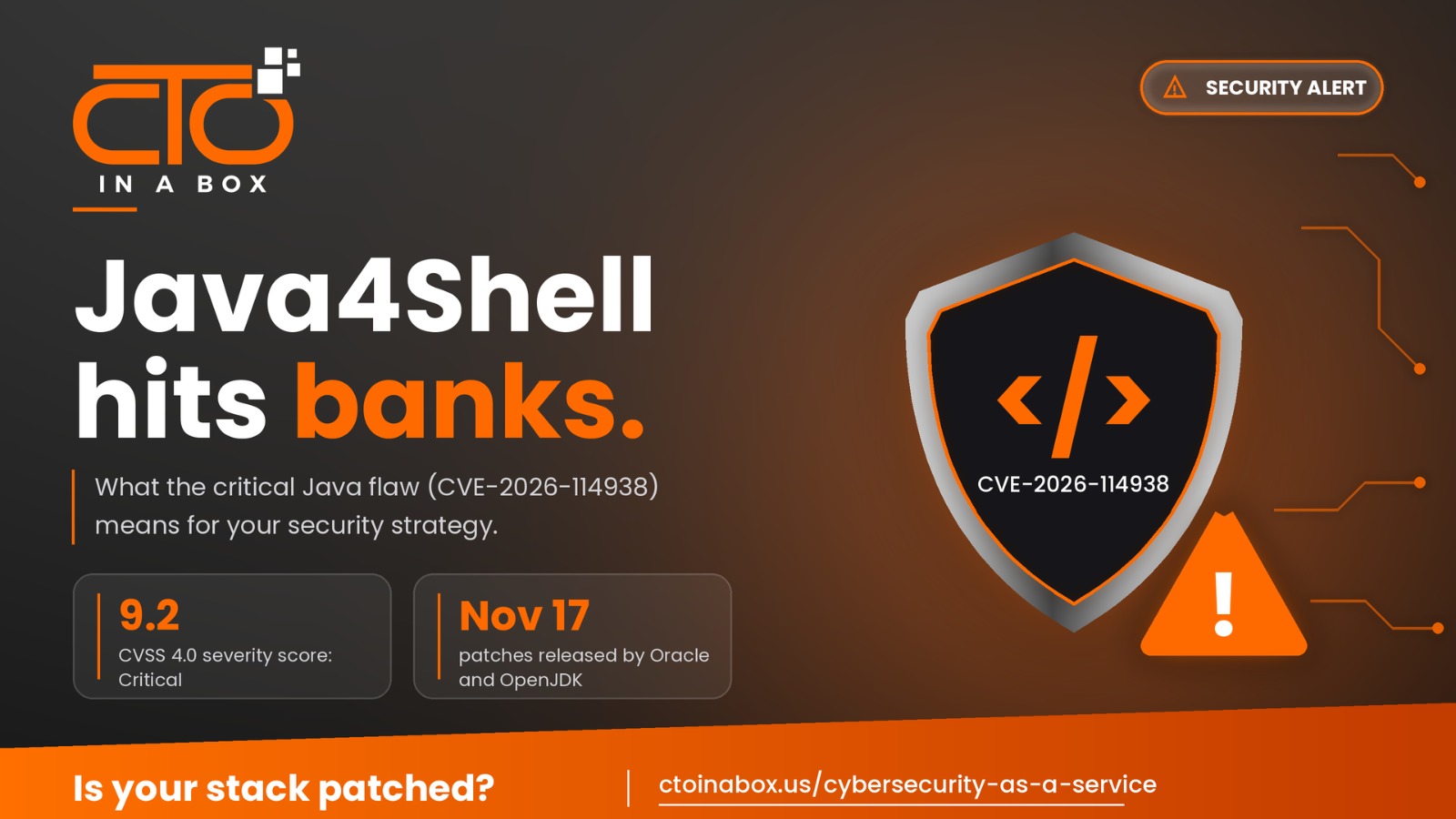
Java4Shell (CVE-2026-114938) is a critical Java flaw affecting banks and enterprises. Learn what's confirmed, what isn't, and how to check your exposure.
Read MoreCybersecurity as a Service
Quick Summary
Summarize this article instantly with your preferred AI model.

Quick Answer
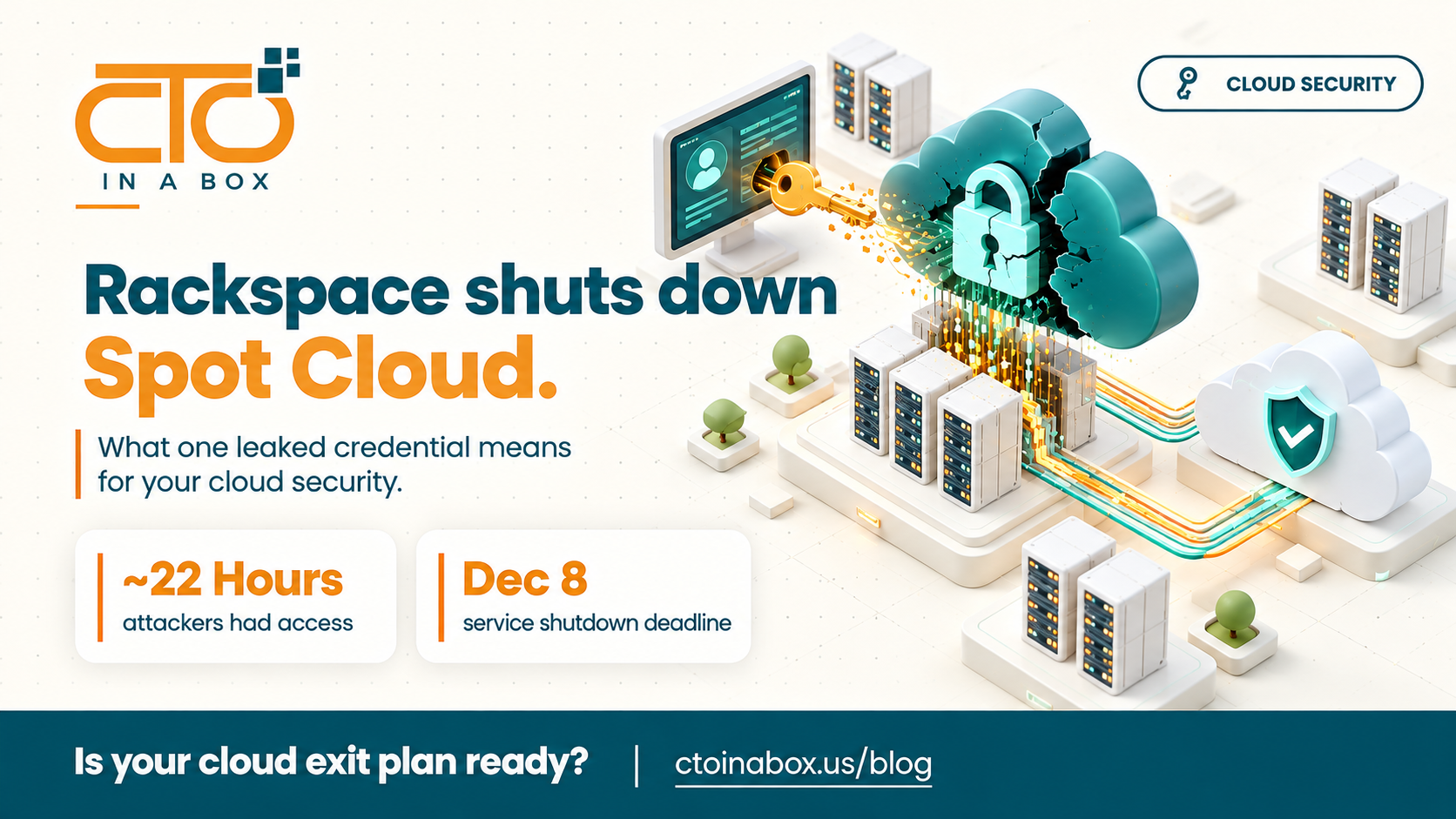
Rackspace is shutting down Rackspace Spot, its low-cost, auction-priced cloud service, after a security breach. Attackers used leaked credentials to access parts of the platform for almost 22 hours on November 17, and the service will cease operations at 1700 Central Time (2300 UTC) on December 8, 2026. Platform9, which co-developed Spot, traces the breach to an observability system accessed with a compromised credential. Rackspace has revoked the affected tokens and sessions and now wants customers to rotate their credentials and migrate within about two weeks.
Why Rackspace chose closure over recovery, how many customers were affected, and whether the deadline will be extended is still unknown.
The story matters because it shows how one leaked credential, one monitoring system and one provider decision can force customers to clean up a breach and migrate at the same time, and most businesses haven’t worked out what they would do if their cloud provider were breached or shut down.
Here’s what’s confirmed, what isn’t, and what it means for your cloud security.
Rackspace’s breach started with a leaked credential. That credential opened a monitoring system, and the damage spread from there. It sounds like a story about one provider, but it points to a very down-to-earth problem: you may not know where your secrets live, who can reach them, or how quickly you could leave. This guide explains what has actually been reported, what it signals for the industry, and what it means for how you plan for provider failure.
Full disclosure: we offer Cybersecurity as a Service ourselves. CTO in a Box delivers it through the embedded model: senior technology guidance on credentials, access and cloud security, backed by delivery teams who can execute the plan. That is exactly why this guide separates confirmed facts from speculation and says plainly when an embedded partner is the right fit and when it isn’t. This guide is not about fixing Rackspace’s systems. It uses the breach to look at the decisions any business faces when a critical provider fails. Facts about the incident come from The Register’s reporting, which cites a Rackspace customer notification, Rackspace’s status notice and a November 20 GitHub post by Platform9’s Sirish Raghuram.
| Detail | Status |
|---|---|
| Shutdown | Confirmed: Rackspace will wind down Spot at 1700 Central Time (2300 UTC) on December 8, 2026; workloads still running are terminated and customers lose access to their data |
| Breach window | Reported: attackers used leaked credentials to access parts of Rackspace Spot for almost 22 hours on November 17 |
| Detection | Reported: Rackspace learned of the intrusion the following day, after a customer raised the alarm |
| Root cause | Reported (Platform9): an observability system was breached using a compromised credential; the incident required significant changes to the underlying infrastructure clusters, prolonging the outage |
| Attacker actions | Reported: the intruders impersonated legitimate users, created pods in customer Kubernetes clusters, gained access to Kubernetes Secrets, and listed nodes and storage volumes |
| Data at risk | Reported: attackers could have read any Secret in an affected user’s clusters, and any Spot API token or refresh token that user held |
| Response | Confirmed: Rackspace revoked the affected tokens and sessions, removed the planted pods and changed the affected platform and storage keys |
| Customer actions | Reported: reissue API tokens, download new Kubernetes configuration files, and rotate credentials stored in clusters, including database passwords and third-party API keys |
| Apology | Reported: Platform9 co-founder Sirish Raghuram called it a critical error and said they were very sorry |
The gaps matter as much as the confirmed items. Rackspace did not respond to The Register’s questions, so details may change. Anyone treating the undisclosed rows as settled fact is already speculating.
The path to this shutdown was short, not slow. On November 17, attackers used leaked credentials to get into parts of Rackspace Spot and stayed for almost 22 hours. Rackspace learned of it the next day, only after a customer raised the alarm. The attackers impersonated legitimate users, planted pods in customer clusters and reached stored Secrets before they were removed.
Recovery was slowed by the fix itself. Raghuram said in a November 20 GitHub post that the incident forced significant changes to the underlying infrastructure clusters, which prolonged the outage. On Tuesday, Rackspace posted its wind-down notice, giving customers until December 8, and has not explained why closure was chosen over recovery.
Each lesson points to a step before the next one begins: protect credentials, detect intrusions before customers do, and keep an exit plan ready. Companies running any critical system can borrow the same logic.
The following is a hypothetical example, not a client case.
Imagine a growing software company that runs batch jobs and internal tools on a low-cost cloud provider. On a Tuesday morning, a notice arrives: the provider was breached, stored credentials may have been read, and the service will shut down in two weeks. The leadership team asks: “If our provider told us to be out in two weeks, would we know what to do?”
The room goes quiet. Engineering wants to know which credentials were exposed, finance wants to know the cost of an emergency migration, and someone asks whether anyone has ever tested restoring from backup.
How the company answers depends on the model it has behind it:
The Tuesday-morning panic becomes a plan with owners and dates.
Companies weighing this today generally choose between three models: an in-house team that handles everything, a strategy-only advisor who gives direction while your team executes, or an embedded partner that combines technology leadership with engineering delivery.
| Model | What you get | Best for | Trade-off |
|---|---|---|---|
| In-house team | Full control; your engineers audit access, rotate credentials and plan the migration | Companies that already have strong engineering and senior technical leadership | Capacity and senior judgment are limited to who you have hired |
| Strategy-only advisor | Direction: credential and access review, exit plan, roadmap | Teams with engineers who need senior direction | Leadership, not delivery; your team has to execute |
| Cybersecurity as a Service (CTO in a Box) | Review of credentials, secrets and access, guidance on securing monitoring tools, a portability and backup plan, and a delivery team to execute it, under one accountable scope | Growth companies, regulated industries, founders without a security team or full engineering org | Custom pricing, scoped per project; reflects team composition, timeline and compliance needs |
How to use this table: choose your model first, based on whether you need direction, direction plus a team of your own, or direction plus shipping, then choose the provider within it.
Best for combined technology leadership and engineering execution.
Many providers focus on strategy: they advise leadership and review architecture while the client’s team stays responsible for implementation. CTO in a Box pairs executive leadership with its own delivery team, so one partner owns both the plan and what ships against it.
Ask every provider these four questions:
Providers that publish pricing, name their clients and staff their own delivery teams make that accountability easy to check before you sign. If you already have a strong engineering team and only need direction, a strategy-only advisor may be all you need. If you need the plan and the people to build it, look at the embedded model.
Ask these questions now, and again whenever you add a new tool:
Attackers used leaked credentials to access parts of Rackspace Spot for almost 22 hours on November 17. Rackspace has since decided to wind the service down on December 8.
At 1700 Central Time (2300 UTC) on December 8, any workloads still running are terminated and customers can no longer access their data, so they need to migrate and retrieve data before then.
Platform9, which co-developed Spot, said an observability system was breached using a compromised credential.
Yes. Attackers used leaked credentials to impersonate legitimate users, create pods in customer clusters and reach Kubernetes Secrets.
Rackspace hasn’t said how many customers were affected. Attackers had access for almost 22 hours, and could have read any Secret in an affected user’s clusters.
Yes. Platform9’s Sirish Raghuram called it a critical error and said they were very sorry. Rackspace did not respond to The Register’s questions.
Rackspace hasn’t said whether it will offer migration extensions.
Know where your secrets live, protect monitoring tools like production systems, keep workloads portable, and rehearse your incident response.
Yes. Every fractional CTO engagement is paired with the firm’s own delivery team: developers, QA, DevOps and automation engineers.
Pricing is custom and scoped per project. Every engagement starts with a scoping call and a fixed, written proposal.
The Rackspace Spot breach is a reminder that critical services can fail from a single leaked credential and leave customers with two weeks to move out. Many questions remain open, including why Rackspace chose closure over recovery and how many customers were affected. The most useful takeaway for your business is closer to home: know where you depend on a single provider, keep your workloads portable, and have a plan before you need one.
If your cloud provider told you to be out in two weeks, would you be ready? Let’s check today.
Talk to us about Cybersecurity as a Service →Contact: hello@ctoinabox.us | +1-680-225-5286
Insights

Java4Shell (CVE-2026-114938) is a critical Java flaw affecting banks and enterprises. Learn what's confirmed, what isn't, and how to check your exposure.
Read More
Cleverbridge says hackers copied card numbers, expiry dates and CVVs. Here's what's confirmed, what isn't, and how to reduce your own vendor risk.
Read MoreIf your cloud provider told you to be out in two weeks, would you be ready? Let’s check today.
Or reach us directly: hello@ctoinabox.us ·
+1-680-225-5286
© 2026 CTO in a Box. All rights reserved.
CTO in a Box is a US-based fractional technology leadership and execution firm providing Fractional CTO, AI & Data Governance, engineering, cloud infrastructure, and compliance services to startups and growth-stage companies across FinTech, Healthcare, Insurance, PropTech, Construction, and Vetcare.